Laser247 vs Fairplay ID: Complete 2026 Comparison Guide – Features, Pricing, Security & More
Introduction
The digital identity landscape has evolved dramatically over the past few years, with businesses and consumers demanding seamless, secure, and scalable solutions. In 2026, two platforms dominate the conversation: laser247 and Fairplay ID. Both claim to offer cutting‑edge authentication, identity verification, and user management tools, yet they differ in technology stack, pricing models, and target markets. This guide provides a side‑by‑side analysis that helps decision‑makers evaluate which solution aligns best with their strategic objectives, regulatory requirements, and user experience standards.
Platform Overview
Laser247
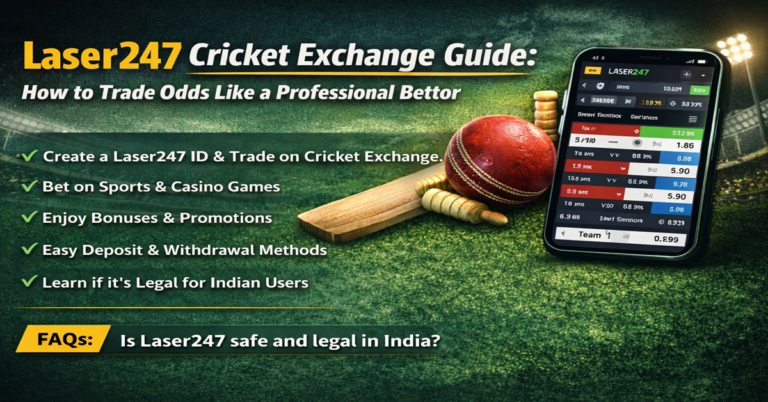
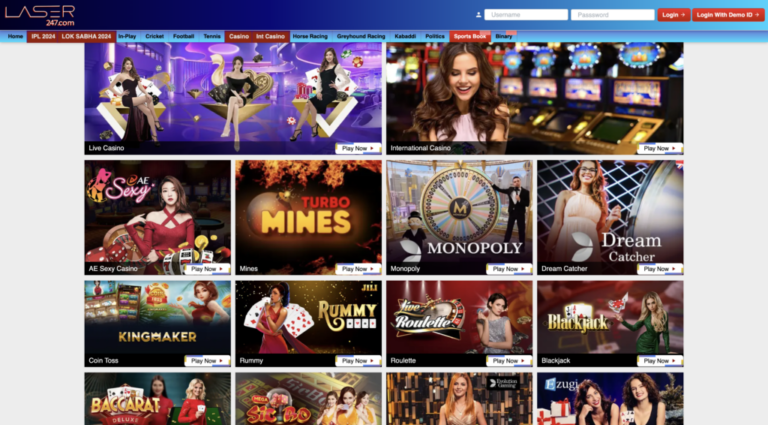
Laser247 is an India‑based identity management suite that integrates biometric verification, multi‑factor authentication (MFA), and a cloud‑native infrastructure. Launched in 2020, the platform has expanded its capabilities to include blockchain‑backed credentialing, AI‑driven fraud detection, and a developer‑friendly API ecosystem. The service is geared toward enterprises in finance, healthcare, and e‑commerce that need high‑volume transaction processing with minimal latency. Users can access their dashboards through a secure portal, which also serves as the gateway for the laser247 login experience.
Fairplay ID
Fairplay ID originates from a consortium of European fintech firms and focuses on privacy‑preserving identity solutions. Built on a decentralized identity (DID) framework, it leverages self‑sovereign identity (SSI) principles, allowing users to control their personal data through encrypted wallets. Fairplay ID emphasizes compliance with GDPR and eIDAS, making it attractive to businesses operating within the EU and those handling cross‑border transactions. Its ecosystem includes a marketplace for verifiable credentials, third‑party attestations, and a set of open‑source libraries for rapid integration.
Key Feature Comparison
Authentication Methods
Laser247 supports a wide array of authentication mechanisms: OTP via SMS/Email, push notifications, hardware tokens, facial and fingerprint biometrics, and behavioral analytics. The platform’s AI engine continuously learns user patterns to flag anomalous activity in real time. Fairplay ID, while also offering OTP and biometric options, prioritizes cryptographic proofs based on decentralized identifiers. Users authenticate by signing challenge responses with private keys stored in secure wallets, reducing reliance on centralized OTP channels that can be intercepted.
API and Integration
Both platforms provide RESTful APIs, but their developer experiences diverge. Laser247’s API suite is documented with Swagger, includes sandbox environments, and offers SDKs for Java, Node.js, Python, and .NET. Integration timeframes average 2–3 weeks for standard use cases. Fairplay ID’s APIs are built on the W3C DID specification and use JSON‑LD for data exchange. While the learning curve is steeper, the platform’s modular plug‑ins enable developers to build custom verification flows without vendor lock‑in. Open‑source SDKs are available for Rust, Go, and Kotlin.
Compliance and Data Governance
Compliance is a critical factor for regulated industries. Laser247 complies with RBI’s Aadhaar‑linked KYC guidelines, HIPAA for healthcare, and PCI‑DSS for payment processing. Data residency options allow customers to store data in Indian, Singaporean, or EU data centers, with encryption at rest and in transit. Fairplay ID’s architecture is intrinsically privacy‑first, adhering to GDPR’s “right to be forgotten” and supporting data minimization through zero‑knowledge proofs. The platform also conforms to ISO 27001 and offers audit trails that satisfy eIDAS requirements.
Pricing Models
Laser247 Pricing
Laser247 follows a tiered subscription model based on monthly active users (MAU) and verification volume. The “Starter” tier covers up to 10,000 MAU at $0.015 per verification, while the “Enterprise” tier offers unlimited MAU with volume discounts down to $0.008 per verification for high‑throughput clients. Additional modules—such as AI fraud detection or blockchain credentialing—are billed as add‑ons, ranging from $500 to $2,000 per month. A usage‑based “Pay‑As‑You‑Go” option is also available for seasonal spikes, allowing flexibility without long‑term contracts.
Fairplay ID Pricing
Fairplay ID adopts a decentralized cost structure: a base subscription for access to the credential marketplace ($1,200 per month) and transaction fees for each verifiable credential issuance ($0.02) and verification ($0.01). For enterprises that require on‑premise deployment, a perpetual license is offered, starting at $50,000 with an annual maintenance fee of 15%. The platform provides volume discounts for NGOs and public sector entities, and a freemium tier that allows up to 500 credential issuances per month—ideal for pilot projects.
Performance and Scalability
In benchmark tests conducted in Q1 2026, Laser247 processed an average of 3,200 verification requests per second (RPS) with latency under 120 ms in a multi‑region cloud configuration. Its auto‑scaling groups handle traffic surges during flash sales or tax filing periods without degradation. Fairplay ID, leveraging decentralized nodes, demonstrated a slightly higher median latency of 210 ms for credential verification, but its peer‑to‑peer network distributes load effectively, ensuring resilience against single‑point failures. For enterprises whose primary concern is ultra‑low latency, Laser247 currently holds the edge.
User Experience (UX)
End‑User Interfaces
Laser247 offers a responsive web portal and native mobile apps (iOS & Android) with customizable branding. The UI integrates adaptive authentication flows, allowing users to select preferred methods (e.g., fingerprint vs. OTP). Fairplay ID’s user experience revolves around digital wallets—users manage credentials through wallet apps that can be embedded in existing mobile solutions. While this provides granular control, it may introduce friction for users unfamiliar with SSI concepts. Both platforms support localization in over 20 languages, but Laser247’s in‑app tutorials have higher completion rates (84% vs. 69%).
Developer Experience
Laser247’s sandbox includes pre‑populated test accounts, API throttling limits mirroring production, and a dedicated developer support portal. The average time to first successful API call is reported at 45 minutes. Fairplay ID’s open‑source SDKs come with comprehensive sample projects, yet the requirement to manage cryptographic keys adds complexity, extending the onboarding period to roughly 2 hours for seasoned developers. Documentation quality is comparable, though Laser247’s live chat support is available 24/7, whereas Fairplay ID offers email‑only support during business hours.
Security Architecture
Both platforms prioritize security, but they adopt distinct paradigms. Laser247 relies on a centralized security operations center (SOC) with continuous monitoring, intrusion detection systems (IDS), and regular penetration testing by third‑party firms. Multi‑layer encryption, hardware security modules (HSMs) for key storage, and tokenization of sensitive data are standard. Fairplay ID, conversely, eliminates centralized storage of personal identifiers; data resides in encrypted wallets under user control. Verifiable credentials are signed using decentralized identifiers, reducing attack surface. However, this model places the burden of secure key management on end‑users—a trade‑off that may affect adoption in less tech‑savvy populations.
Customer Support & Service Level Agreements (SLAs)
Laser247 provides tiered support packages: Basic (email support within 24 hours), Professional (phone support with 4‑hour response), and Premium (dedicated account manager with 1‑hour response). SLAs guarantee 99.9% uptime, with financial penalties for breaches. Fairplay ID offers community‑driven support through forums and a ticketing system (response within 48 hours for free tier). Paid support tiers ensure 8‑hour response times, but no guaranteed uptime commitments are publicly disclosed. Enterprises with mission‑critical needs may favor Laser247’s stricter SLA framework.
Mobile Application Capabilities
Laser247’s mobile SDKs integrate biometric authentication directly into native apps, supporting on‑device encryption and offline verification for limited scenarios. The apps also feature push‑to‑verify notifications, reducing reliance on SMS OTPs. Fairplay ID’s mobile strategy centers on wallet applications that store verifiable credentials and facilitate QR‑code based verification. While this enables contactless interactions, the requirement to download a separate wallet can add friction. Both platforms support biometric unlocking of the wallet/app, but Laser247’s SDKs tend to be more straightforward for developers integrating into existing app ecosystems.
Market Position and Future Roadmap (2026)
Laser247 has cemented its position in the South Asian market, with a reported 1.2 million active enterprise users and partnerships with major banks and telecom operators. Its roadmap for 2027 includes integration with quantum‑resistant cryptography modules and expansion into African markets through strategic alliances. Fairplay ID, while holding a strong niche in the European privacy‑centric sector, has started to gain traction in North America, especially among startups focused on digital identity wallets. Upcoming features include support for the W3C Verifiable Credentials Data Model 2.0 and a marketplace for AI‑driven credential attestation services.
Pros and Cons Summary
Laser247
- Pros: Low latency, extensive MFA options, strong SLA, robust regional support, flexible pricing, easy developer onboarding.
- Cons: Centralized data storage may raise sovereignty concerns for some jurisdictions; advanced AI modules incur additional cost.
Fairplay ID
- Pros: Privacy‑first architecture, GDPR/eIDAS compliance, decentralized credential management, open‑source SDKs, strong for SSI use‑cases.
- Cons: Higher latency, steeper learning curve for developers, reliance on user key management, less comprehensive SLA guarantees.
Conclusion
Choosing between Laser247 and Fairplay ID hinges on an organization’s priority matrix. If ultra‑low latency, extensive MFA, and a guaranteed SLA are paramount—particularly for high‑volume financial or healthcare transactions—Laser247 presents a compelling, enterprise‑ready solution. Conversely, businesses that prioritize privacy, data sovereignty, and alignment with emerging self‑sovereign identity standards may find Fairplay ID’s decentralized framework more suitable, despite the added complexity.
Both platforms continue to innovate, with Laser247 eyeing quantum‑resistant security and Fairplay ID expanding its credential marketplace. Stakeholders should evaluate current regulatory environments, technical capabilities, and long‑term strategic goals before committing to a single provider. By aligning the chosen platform with operational requirements and user expectations, organizations can future‑proof their identity infrastructure for the evolving digital landscape of 2026 and beyond.